Every year, hundreds of industrial accidents occur because machinery is accidentally re-energized during maintenance. The human cost is devastating—preventable injuries, lost limbs, even fatalities. But these incidents aren’t random. They stem from inconsistent or missing lockout tagout (LOTO) procedures.
A well-documented LOTO process is not just best practice—it’s a legal requirement under OSHA standard 29 CFR 1910.147. Yet, many small to mid-sized businesses still rely on verbal instructions or incomplete checklists. That’s where a free lockout tagout procedure template becomes essential: it standardizes safety, reduces risk, and keeps teams compliant without reinventing the wheel.
This guide delivers a ready-to-use, customizable LOTO template—and walks you through how to implement it correctly.
Why You Need a Lockout Tagout Procedure
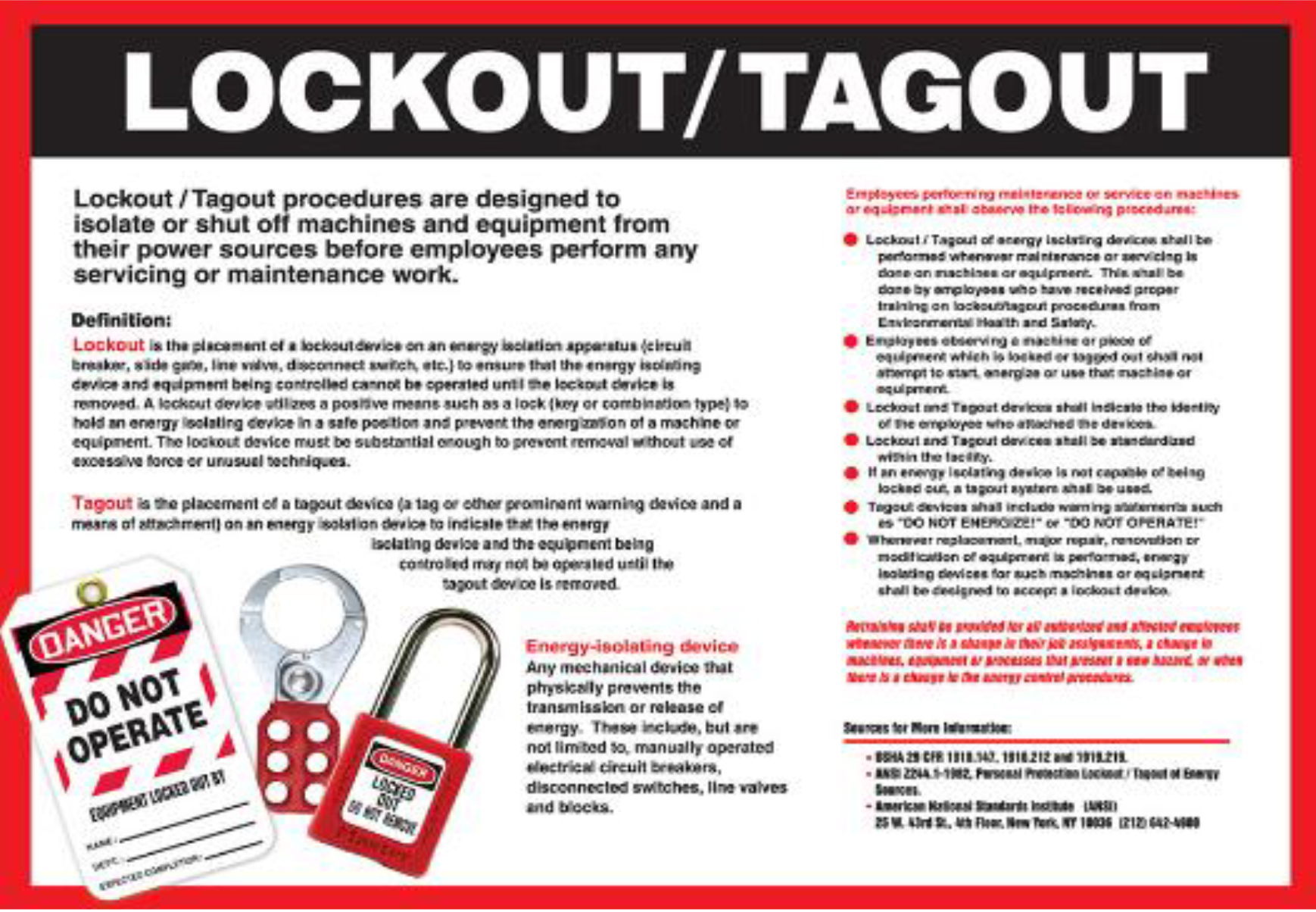
Lockout tagout is the systematic process of de-energizing equipment and securing it with locks and tags to prevent accidental startup during servicing. Without a formal procedure, even experienced technicians are exposed to hazardous energy—electrical, mechanical, hydraulic, pneumatic, chemical, or thermal.
Consider this real-world scenario: A maintenance worker clears a jam in a conveyor system. The machine appears off. But a colleague, unaware of the maintenance, hits the restart button from a remote panel. The result? Severe crushing injuries.
This kind of incident is entirely preventable with a documented LOTO procedure. A standardized template ensures that:
- All energy sources are identified and controlled
- Only authorized personnel apply or remove locks
- Each step is verified and recorded
- Communication between shifts is clear
Most importantly, a solid template reduces ambiguity. It turns safety from a vague directive into a repeatable, auditable process.
What a Free LOTO Procedure Template Should Include
A high-quality free lockout tagout procedure template isn’t just a checklist. It’s a comprehensive document tailored to specific machines or processes. Here are the core elements it must contain:
1. Equipment Identification Clearly name the machine, its location, and unique ID number. Avoid generic labels like “pump” or “compressor.” Use asset tags or serial numbers when possible.
Example: Hydraulic Press #HP-215, Production Line B, North Facility
2. Authorized Personnel List Identify who is trained and permitted to perform LOTO. This section should be updated quarterly and include employee names, roles, and training dates.
3. Energy Sources List every form of hazardous energy the machine uses:
- Electrical (voltage level)
- Pneumatic (air lines)
- Hydraulic (fluid lines)
- Mechanical (springs, gravity)
- Thermal (heated surfaces)
Pro Tip: Use a diagram or schematic if multiple energy sources are hard to visualize.
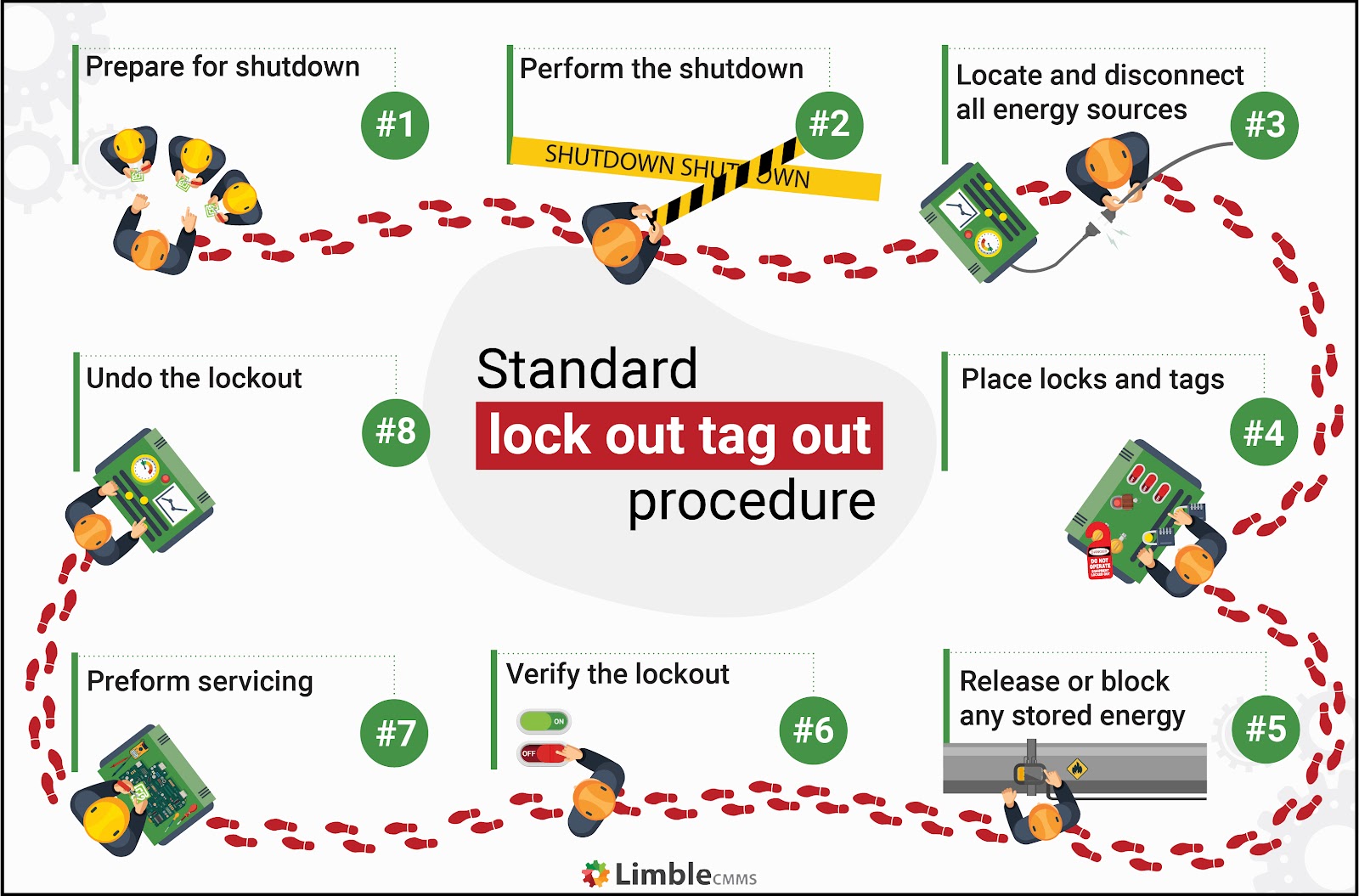
4. Step-by-Step Shutdown and Isolation Outline precise actions in sequence:
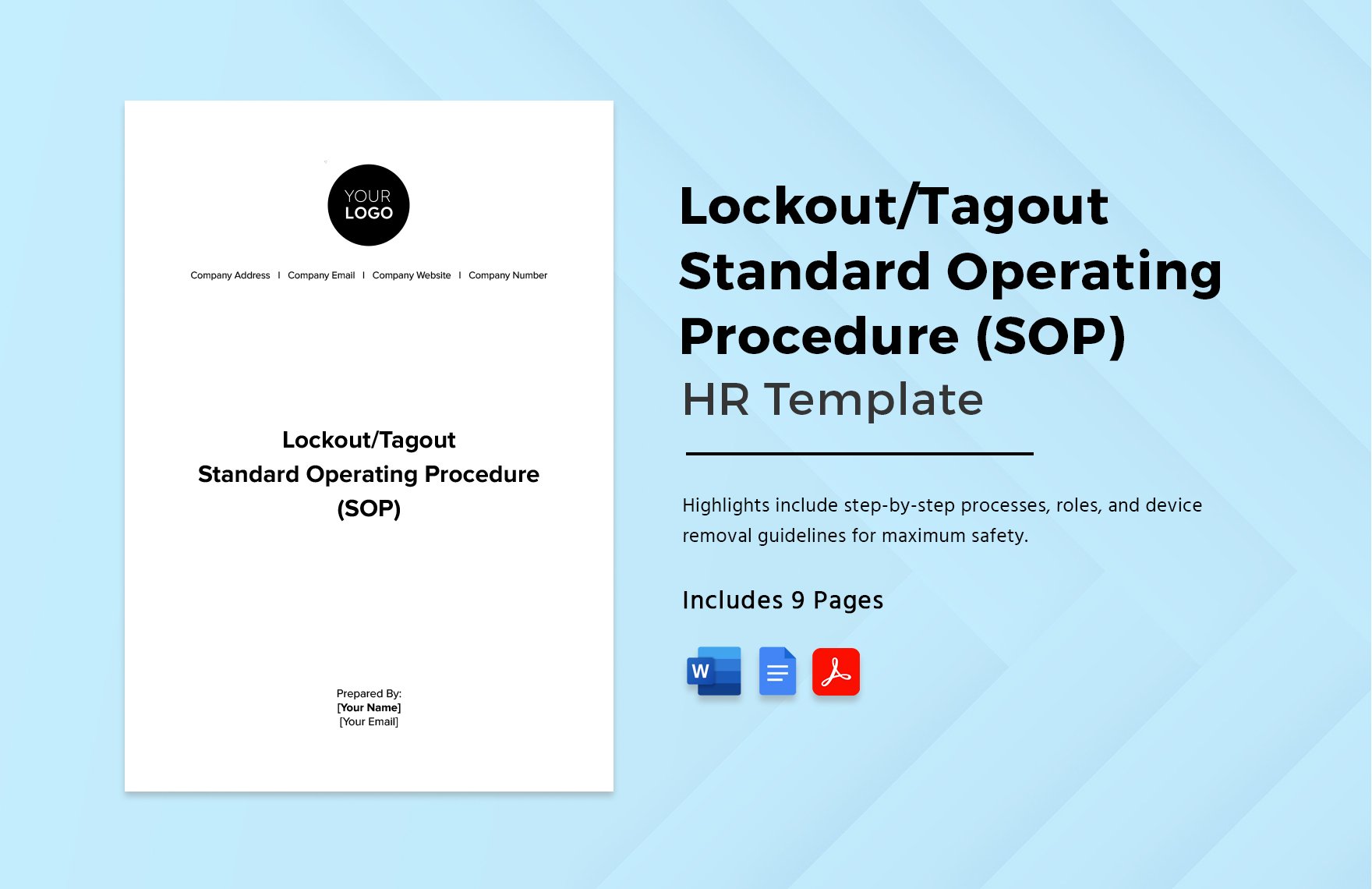
- Notify affected employees
- Shut down the machine using normal controls
- Isolate all energy sources (e.g., flip breaker, close valve)
- Apply lockout devices (lock and tag each point)
- Release stored energy (bleed lines, block moving parts)
This section must be machine-specific. A generic “turn off and lock” instruction fails under OSHA scrutiny.
5. Verification of Zero Energy Specify how the worker confirms the machine cannot start: - Try to activate controls (e.g., press start button) - Test for voltage with a meter - Visually inspect line breaks
This is the most critical step—and the most commonly skipped.
6. Restoration Procedure Detail how to safely return the machine to service:
- Confirm all tools are removed
- Ensure guards are reinstalled
- Clear the area of personnel
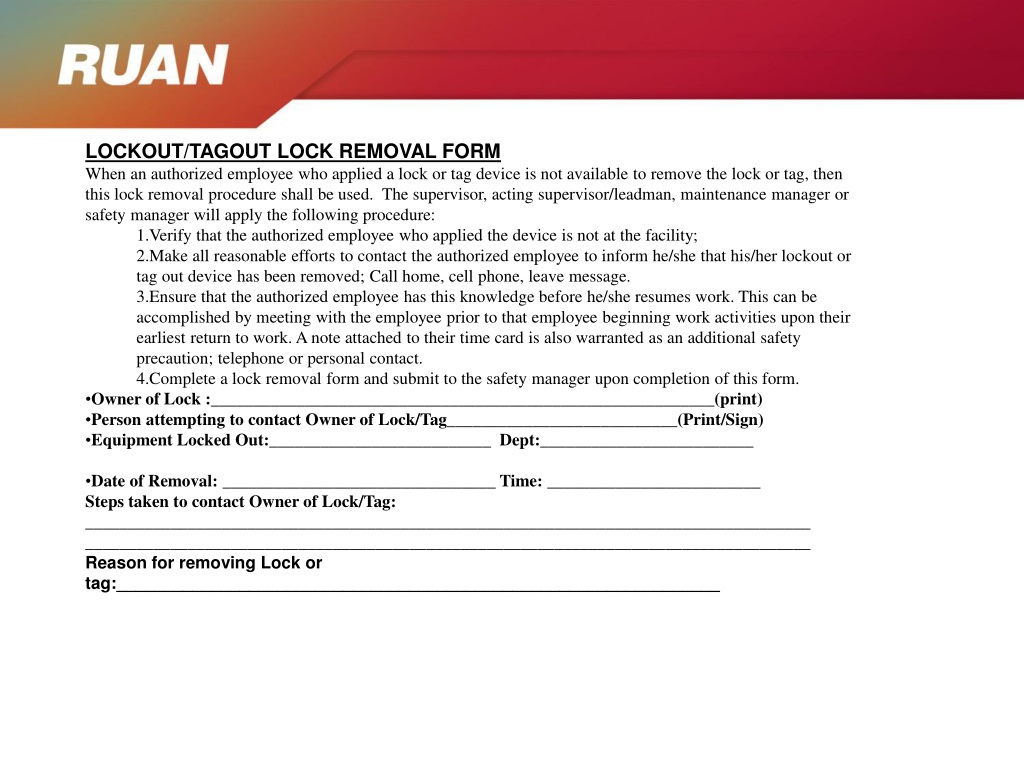
- Remove locks only by the person who applied them
- Notify affected workers before restart
Never allow group lockout procedures without a formal group LOTO plan.
Where to Download a Free Lockout Tagout Template
While you can build a LOTO procedure from scratch, using a free, professionally designed template saves time and ensures compliance. Here are five credible sources offering free, customizable LOTO templates:
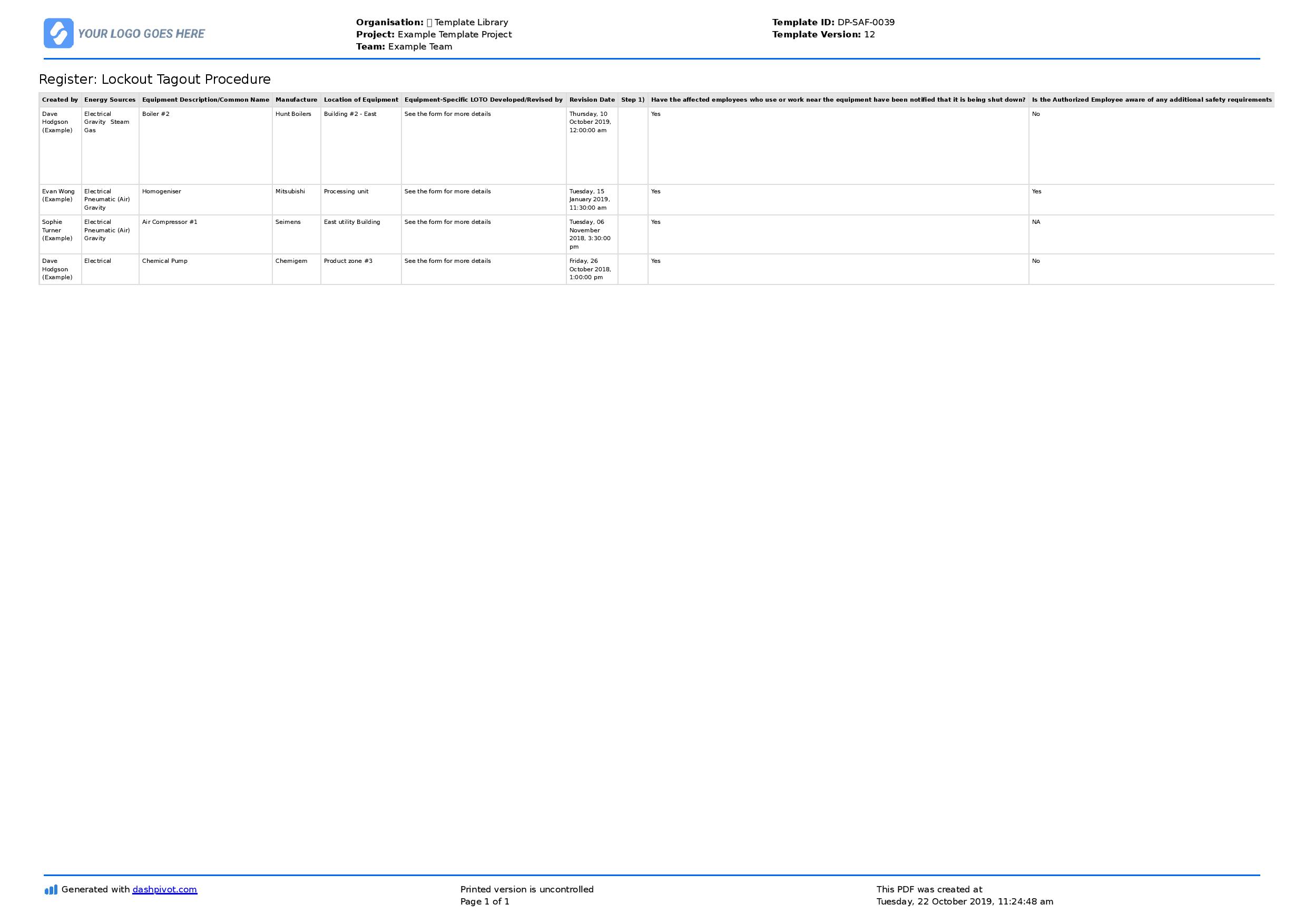
| Source | Format | Key Features | Download Link |
|---|---|---|---|
| OSHA.gov | PDF, Word | Official OSHA format, compliant with 1910.147 | osha.gov/loto |
| Creative Safety Supply | Word, Excel | Machine-specific templates, visual aids | creativesafetysupply.com |
| SafetyCulture (iAuditor) | Digital checklist, PDF | Mobile-friendly, cloud-based audits | safetyculture.com |
| Seton.com | PDF, customizable | Pre-filled examples, tag designs included | seton.com |
| MySafetySign.com | Word, PDF | Multi-language options, OSHA-aligned | mysafetysign.com |
Workflow Tip: Download 2–3 templates, compare their structure, then merge the best elements into your own master version. Avoid using templates verbatim—customize them for your equipment and workflow.
Common Mistakes When Using Free LOTO Templates
Even with a solid template, companies fail at execution. Here are frequent errors and how to avoid them:
Mistake 1: One Template for All Machines
Using the same procedure for a CNC machine and a forklift violates OSHA’s requirement for equipment-specific plans. Fix: Adapt the template for each major piece of equipment.
Mistake 2: Skipping Employee Training A template is useless if workers don’t understand it. Fix: Conduct hands-on LOTO drills during onboarding and annually.
Mistake 3: Incomplete Energy Source Identification Overlooking stored energy (e.g., a flywheel that coasts) creates false confidence. Fix: Perform an energy audit with maintenance leads.
Mistake 4: Allowing Tag-Only Procedures Without Locks Tags alone don’t physically prevent startup. OSHA allows tag-only systems only in limited cases (e.g., when a lock can’t be applied). Fix: Use lockout devices (hasps, valve locks) as the primary control.

Mistake 5: No Procedure for Shift Changes Night shift workers may remove locks they didn’t apply. Fix: Implement a “lockout log” that transfers custody with shift handoffs.
How to Customize Your Free LOTO Template
A downloaded template is a starting point. Here’s how to tailor it effectively:
- Conduct a Machine Audit
- Walk through your facility. List all equipment requiring LOTO. Classify by energy type and risk level.
- Involve Maintenance Teams
- Frontline technicians know the quirks of each machine. Their input improves accuracy.
- Add Visuals
- Insert photos or diagrams showing lock placement points. A picture of a valve lock on a hydraulic line is worth a thousand words.
- Integrate with Existing Systems
- If you use a CMMS (Computerized Maintenance Management System), link LOTO procedures to work orders.
- Test and Revise
- Run a tabletop drill. Simulate a breakdown and walk through the template. Note where confusion arises.
- Print and Post
- Keep laminated copies near machines. Digital-only access fails during power outages.
Real-World Use Case: Small Manufacturing Facility
A 30-person machine shop producing metal components had no formal LOTO process. After a near-miss involving a band saw, they downloaded a free template from OSHA.gov and customized it.
Steps they took: - Identified 12 high-risk machines - Trained 8 authorized employees - Created machine-specific procedures with photos - Installed lockout stations near each production line
Within three months, they passed an OSHA consultation audit with zero deficiencies. More importantly, maintenance time dropped 15%—not because they worked faster, but because downtime due to safety delays decreased.
The template didn’t just ensure compliance—it improved operational efficiency.
Limitations of Free Templates
Free lockout tagout procedure templates are valuable, but they have limits:
- Generic Language: May not address industry-specific risks (e.g., confined space LOTO in wastewater plants)
- No Legal Guarantee: Compliance depends on implementation, not the document alone
- Outdated Formats: Some templates haven’t been updated to reflect recent OSHA guidance
- No Training Support: Templates don’t teach employees how to use them
For high-risk or complex environments (e.g., chemical plants, large manufacturing), consider pairing a free template with a professional safety audit.
Final Step: Make It Actionable Today
Don’t let safety wait for perfection. Here’s what to do now:
- Download a free lockout tagout procedure template from OSHA or a trusted provider.
- Select one high-risk machine to pilot it on.
- Customize the steps, add photos, and list energy sources.
- Train the maintenance team using the new document.
- Audit the process after three uses and refine.
A free template is more than a form—it’s the foundation of a culture where safety is systematic, not situational.
Frequently Asked Questions
What is a lockout tagout procedure template? It’s a standardized document that outlines the exact steps to safely de-energize and secure machinery during maintenance.
Is a free LOTO template OSHA-compliant? The template itself isn’t compliant—your implementation is. But using an OSHA-aligned template ensures you cover required elements.
Can I use the same template for multiple machines? No. OSHA requires equipment-specific procedures. Use the template as a format, but customize it for each machine.
Who should use a LOTO template? Any business that services or maintains machinery—manufacturing, utilities, construction, labs, and facilities management.
Do I need locks and tags if I have a template? Yes. The template guides the process, but physical lockout devices are required to control energy.
Can I edit a free template? Absolutely. In fact, you must customize it to reflect your equipment, energy sources, and workforce.
Where should LOTO procedures be stored? They should be accessible at or near the machine—printed, laminated, and posted. Digital backups are recommended.
FAQ
What should you look for in Free Lockout Tagout Procedure Template for Workplace Safety? Focus on relevance, practical value, and how well the solution matches real user intent.
Is Free Lockout Tagout Procedure Template for Workplace Safety suitable for beginners? That depends on the workflow, but a clear step-by-step approach usually makes it easier to start.
How do you compare options around Free Lockout Tagout Procedure Template for Workplace Safety? Compare features, trust signals, limitations, pricing, and ease of implementation.
What mistakes should you avoid? Avoid generic choices, weak validation, and decisions based only on marketing claims.
What is the next best step? Shortlist the most relevant options, validate them quickly, and refine from real-world results.